
Last Sunday we celebrated Jesus’ baptism. At every Baptism celebration the rite opens with the same question: What name have you given to your child? It’s an important question. Why were you given the name you have? Why did we choose the names of our children? Maybe the name is to develop a relationship with a special saint or to honour a significant person in a child’s life. If you could give yourself a new name, what would it be?
Today’s text from John’s gospel continues the story of Jesus’ baptism. Here the focus is on John the Baptist and his prophetic role in announcing Jesus as the Promised Messiah. On this occasion the description John uses of Jesus as the “the Lamb of God, who takes away the sin of the world!”
As we grow into our baptism we grow in the knowledge of who we are, not just as individuals but as a people. We are God’s beloved, and the Lamb of God comes to wash away our sin. Are we broken? Yes. Are we sinful? Yes. Are we God’s beloved? Yes.
Fr. Richard Rohr says: “We are not loved because we’re good; we become good because we’re loved.” There was a book from back in 1967, “I’m Okay, You’re Okay”? Today’s Gospel says, “I’m not okay, you’re not okay.” But I am beloved and you are beloved. This journey that we make together as a holy family of faith is a journey into believing the truth of our baptism. The Sacrament of Baptism is received once in our life, and this Sacrament launches us on a journey to grow into believing that you and I are God’s beloved, despite our brokenness, despite that fact that we’re not okay, despite the fact that we do terrible things to one another and to ourselves. God never, ever, turns his back on us. Jesus shed’s his blood not to appease some angry God. Jesus’ death changes nothing in the heart of God because God’s promise is eternal love.
But that blood shed for us is the eternal promise that we might believe and never forget how much God loves us —- Despite our faults and our failings —— Despite our inconsistencies as individuals, —-as a church, —–as a nation and as a world. We are a broken people. And still Jesus comes to say, “I love you, I forgive you, let me wash you clean. Let me renew the power of your baptism every day.”
I have spent a lot of time visiting some of the inmates in prison. Most of the inmate/friends that I have met inside there are very aware of their sins and seek healing and forgiveness. They appreciate that God is just and expects change, but we live in a world where the notion that we are sinners needing a Savior from God’s judgment is really out of sync.
If we aren’t sinners, then we don’t need a Savior. If God isn’t absolutely holy and just, then we don’t need a Savior who died to satisfy God’s wrath against our sin. If He has already saved us by our Baptism and is only “loving,” then we don’t need to fear His judgment. All we need is a “friend” who can urge us all to be more loving to each other.
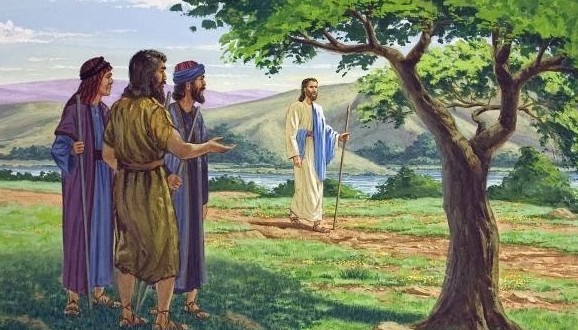
John the Baptist did not preach that kind of message. His message was, “Repent, for the kingdom of heaven is at hand.” John the Baptist saw Jesus coming toward him and said, “Behold, the Lamb of God, who takes away the sin of the world…”
Behold, the Lamb of God. This name is a classic. It goes all the way back to when Moses leads his people out of Egypt. So, when Jesus identified himself with this name, he was saying: I want to lead you out of the slavery of sin to the real Promised Land, Heaven. I want to be your guide. I want to be your Advocate. Allow me to lead you.
Cardinal Robert Prevost became Pope Leo XIV after his ascension to the role via the fourth vote of a conclave. Was it because he liked how it sounded? Of course not.
The reason was quite simple: He wanted to send a clear message to everyone: His Pontificate will be in the style of Pope Leo XIII with his name choice.
Leo XIII held the papacy from 1878 to 1903 and is known for the 1891 encyclical,” “Of revolutionary change.” The letter critiques socialism and unrestricted capitalism, prioritizes the rights of workers and the needs of the poor, and reaffirms the Catholic Church’s purpose of working toward justice and dignity for everyone.
In that tradition Pope Leo XIV will speak out against poverty, waste and greed; He will be an advocate for the outcasts, the homeless and refugees; He will be a reformer for the Church, an environmentalist for the earth, and a lover of the unforgiveable and unlovable. All of this comes from a name.
God commanded his chosen people to slaughter an unblemished male lamb. Why a lamb? For no good reason. This poor creature didn’t deserve this type of treatment. It was entirely innocent. It had done nothing wrong.
The same holds true of Christ. The Lord never hurt anyone. He never committed a sin. He did nothing wrong. So when he assumed the name “Lamb of God” he was telling the world: I will die for you. I will lay down my life for you. “Come to me, all you who are weary and burdened, and I will give you rest. Take my yoke upon you and learn from me, for I am meek and humble of heart, and you will find rest for your souls”.
So back to the beginning: What name will help us grow into our baptism and grow in the knowledge of who we are?
Which name will you choose for yourself this New Year?
– Deacon Terry Murphy